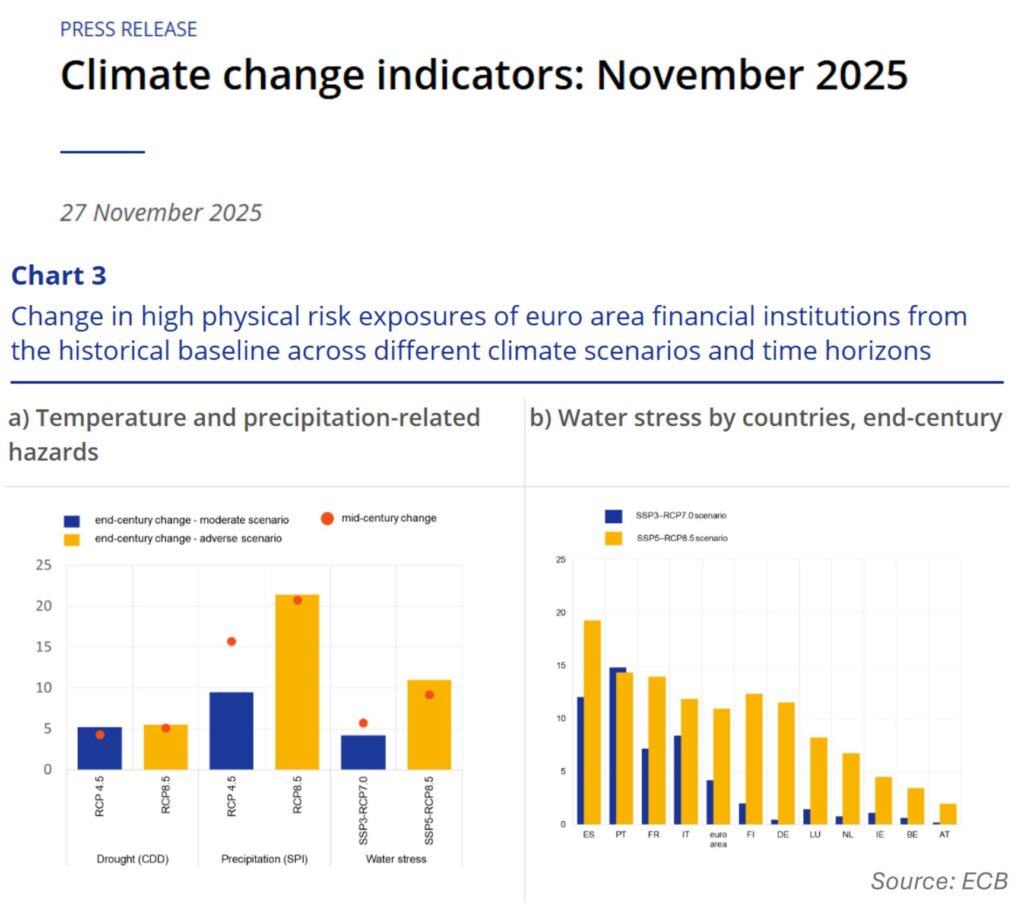
The ECB published an update to its Climate Change Indicators on 27 November 2025, introducing methodological upgrades and new data cuts, with particularly relevant developments on the physical risk side. Among the clearest signals in the release are the growing exposures linked to temperature and precipitation-related hazards, especially SPI, consecutive dry days, and water stress, with strong cross-country differences across the euro area and some of the largest increases concentrated in southern Europe under higher-emissions scenarios.
What stands out in the 2025 update is the combination of sharper indicators and concrete modelling improvements, including:
- Better geolocation and refinements in how hazards and impacts are mapped to economic exposures
- Improved damage modelling for floods and windstorms by incorporating inventories alongside tangible fixed assets, helping close a long-standing gap for industrial and manufacturing sectors
- More robust imputation approaches when firm-level inventory data are not available, using structured sector and country assumptions
- A major windstorm upgrade based on the new Copernicus Enhanced Windstorm Service dataset, with full-year coverage and monthly updates back to 1940
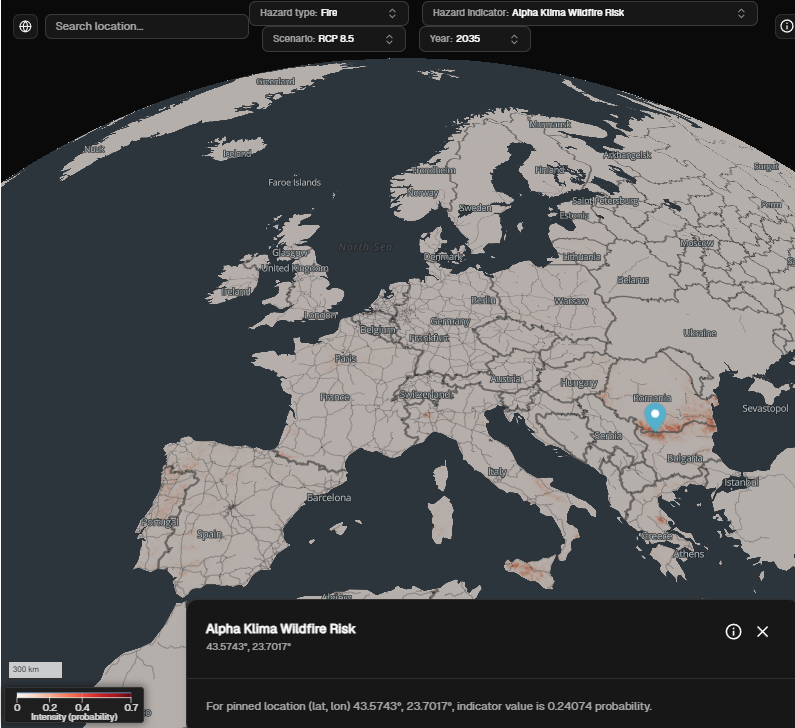
At Alpha-Klima, these physical risk indicators are already embedded in our assessment pipeline, and we will be tracking these methodological upgrades closely as we continue to update our datasets and analytics.
Source
https://www.ecb.europa.eu/press/stats/cci/html/ecb.cci251127.en.html