Case study ·
Extreme heat as a systemic climate risk: Lessons from Europe's June 2026 heatwave

Extreme heat is becoming a systemic climate risk in Europe, affecting mortality, energy systems, agriculture, transport and labour productivity. Its impacts depend not only on temperature, but also on humidity, local conditions and the vulnerability of exposed populations and assets.
Key insights
- Heat is becoming a more frequent, intense and widespread climate risk across Europe.
- Health impacts depend on exposure and vulnerability as well as temperature, making heat a strongly unequal risk.
- Energy, agriculture, transport and labour can be affected at the same time, creating correlated economic losses.
Europe under heat stress
Unlike floods, storms or wildfires, heatwaves rarely leave visible damage to buildings. Their effects appear instead as mortality and illness, lower labour productivity, stressed power systems, reduced agricultural yields, poorer air quality and higher energy demand.
This makes heat easy to understate in assessments centred on repair costs. From a societal and risk-management perspective, however, it is one of Europe’s most pervasive climate hazards, as heatwaves are estimated to cause more annual fatalities across Europe than all other climate-related hazards combined.
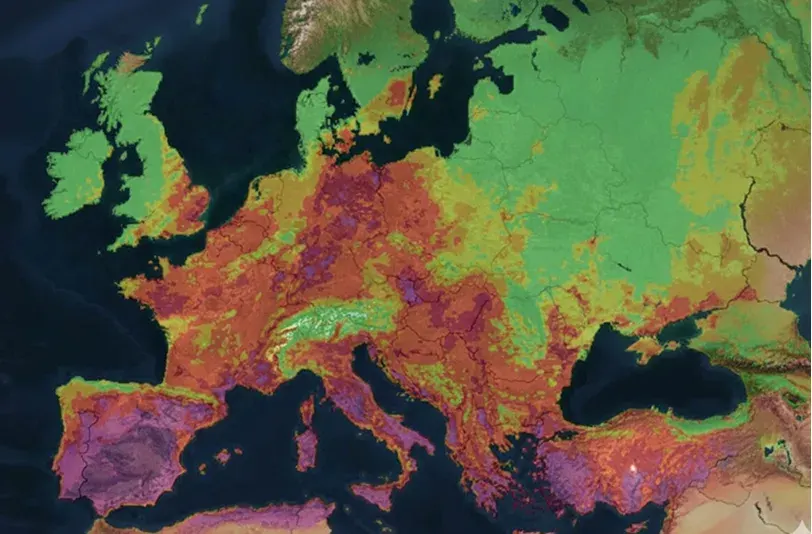
The June 2026 heatwave illustrated the scale of this risk. A rapid World Weather Attribution study reported that nearly half of Europe’s 854 largest cities experienced record heat stress during the event.
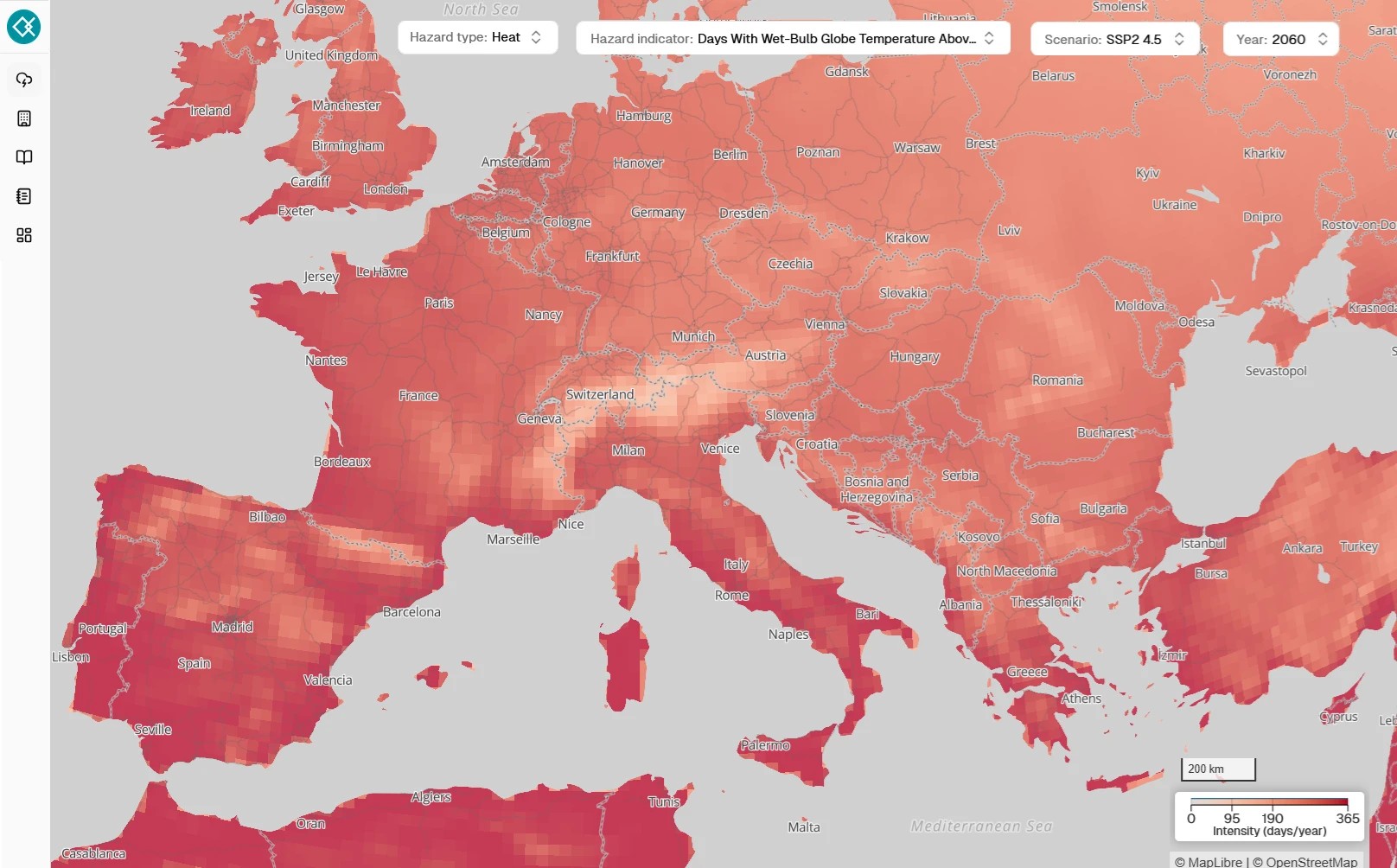
The study used Wet-Bulb Globe Temperature (WBGT), which combines temperature, humidity, solar radiation and wind speed to represent physiological stress more fully than air temperature alone. It concluded that climate change increased both the likelihood and intensity of the event.
Estimated daytime temperatures were about 3.5 °C above those of an equivalent event in 1976, while nights were about 2.4 °C warmer. Even compared with the exceptional European heatwave of 2003, daytime temperatures were about 2 °C higher, with nights remaining approximately 1.3 °C warmer. These findings highlight not only the increasing intensity of extreme heat events, but also the growing importance of persistently high night-time temperatures, which are proven to restrict physiological recovery after daytime heat, and they substantially increase the risk of heat-related illness and death.
The map below shows the event’s spatial extent through temperature anomalies across Europe, which reached unprecedented levels.
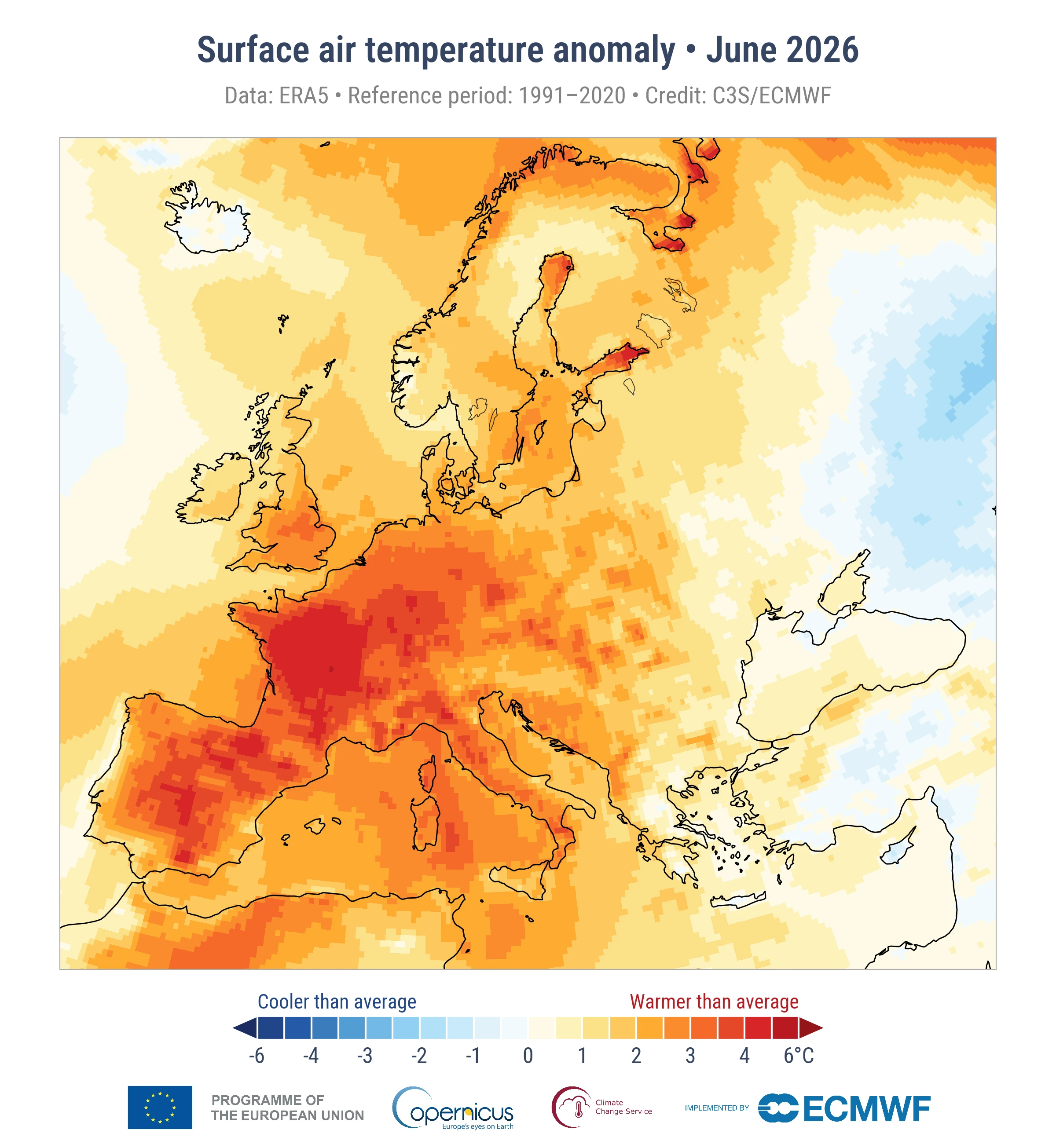
The United Kingdom recorded 38.7 °C in Somerset, its highest June temperature, while Paris reached 40.3 °C and recorded a night-time minimum of 27 °C. Germany registered a record warm night of 29.4 °C in Kubschütz, and Vienna exceeded 40 °C for the first time in its instrumental record.
Taken together, these were not isolated local extremes but evidence of a continent-wide event affecting millions of people and exposing them to exceptionally severe thermal conditions.
Heat, health and vulnerability
Heatwaves act through several connected channels, of which mortality is the most significant and best-documented. Nevertheless, the outcome depends on who is exposed and under what conditions.
As temperatures rise, the body becomes less able to regulate its internal temperature. The risks include dehydration, heat exhaustion, heatstroke, and cardiovascular and respiratory distress. Sustained exposure can also worsen existing cardiovascular, renal and respiratory conditions.
Preliminary French estimates indicated about 1,000 excess deaths between 24 and 26 June, around 85% among people aged 65 or older. That figure has since been revised twice. As of 3 July 2026, Santé publique France recorded 2,025 more deaths in the week of 22–28 June than in the preceding week, a 29.1% increase. As of 22 July 2026, its first consolidated estimate puts the toll at 5,764 excess deaths between 17 June and 2 July, 36% above the expected level, with people aged 75 and over accounting for two-thirds of them; Santé publique France still describes that as preliminary, to be confirmed in the autumn. In Spain, the Instituto de Salud Carlos III mortality-monitoring system attributed more than 1,000 deaths during June to high temperatures.
The ISGlobal report Calor extremo, salud en riesgo identifies heat stress as Spain’s leading climate-related health risk. It projects more frequent heatwaves and tropical nights, which restrict recovery after daytime exposure and are associated with higher mortality during prolonged events.
Heat vulnerability also has a strong social dimension. Income, housing quality, access to green space and the urban environment influence the risk of illness or death. Older people, women living alone and residents of socially vulnerable neighbourhoods face particularly high risks.
Heat can also interact with air pollution. High temperatures and solar radiation accelerate the formation of ground-level ozone, which harms respiratory and cardiovascular health. Thermal stress and degraded air quality can therefore reinforce one another in densely populated areas.
How heat propagates through the economy
Heat also creates diffuse economic losses through lower productivity, infrastructure constraints, resource scarcity and supply-chain disruption. Because several sectors can be affected at once, financial institutions need to assess the transmission channels together rather than as isolated asset damage.
Energy systems under stress
Extreme heat places power systems under dual pressure. Cooling raises electricity demand at the same time that high air and water temperatures can reduce generation capacity.
During the June 2026 heatwave, wholesale electricity prices increased across several European markets as cooling demand rose and parts of the generation fleet became less reliable.
In northern Switzerland, the Beznau nuclear plant shut both reactors after the River Aare exceeded environmental cooling thresholds. France reduced output at several reactors, while authorities in Hungary warned that warm Danube water could constrain the Paks plant.
Heat can therefore widen the gap between electricity supply and demand when the system is already under stress. The effects can include price volatility, supply constraints and business interruption for energy-intensive industries.
Agriculture
Agriculture is highly sensitive to prolonged heat. High temperatures affect crop development, accelerate evapotranspiration, reduce soil moisture and increase irrigation demand. The effects are especially severe during flowering or grain filling.
Heat also intensifies drought, wildfire conditions and low river flows, placing more pressure on irrigation and freshwater. In Italy, exceptionally low flow in the Po river allowed seawater to move up to 18 kilometres inland, threatening agriculture and protected wetlands in the delta.
Together, these mechanisms can drive agricultural losses, food-price volatility and pressure on water resources, and as climate change increases both the frequency and duration of heatwaves, these processes are expected to become increasingly important.
Transportation and supply chains
Reduced river flows can disrupt inland navigation and transmit heat-related losses into industrial production and supply chains.
Studies of low water levels on the Rhine show how river-transport disruption spreads through manufacturing industries that depend on the waterway for fuels, chemicals and raw materials: Vinke et al. (2022) trace the cascading effects of sustained low discharge through waterborne supply chains, and Jonkeren et al. (2007) measure the freight-price channel. Ademmer, Jannsen and Meuchelböck (2020), at the Kiel Institute for the World Economy, estimate that one month of exceptionally low Rhine levels can reduce German industrial production by about 1%.
Land transport is also exposed. During the June 2026 event, rail operators reduced services in parts of North Rhine-Westphalia, while damaged track expansion joints interrupted tram services in Leipzig.
Labour productivity
Heat reduces labour productivity through physiological stress, fatigue and dehydration. The result can be slower work, more frequent breaks or, under severe conditions, the suspension of outdoor activity.
García-León et al. (2021), studying the European heatwaves of 2003, 2010, 2015 and 2018, estimated that lower labour productivity reduced annual output by about 0.3–0.5% of GDP across Europe, with losses above 1% in the most exposed regions. More frequent and persistent heat can turn those episodic losses into a structural drag.
Implications for risk assessment
Heat is not only a public-health emergency or a direct-damage question. It can affect people, power, water, transport and production in the same period, creating correlated losses across a portfolio.
A useful assessment therefore needs more than maximum temperature. It should combine measures of heat stress with the vulnerability of people and assets, identify indirect dependencies, and keep health, operating-cost, interruption and productivity channels distinct before aggregating them.
Data sources
- ERA5 reanalysis, Copernicus Climate Change Service (C3S/ECMWF) – temperature anomalies in the figure above.
- NASA Earth Exchange Global Daily Downscaled Projections (NEX-GDDP-CMIP6) – the Wet-Bulb Globe Temperature projection.
Keep exploring
Related evidence
Aresbank: Physical climate risk across the banking book
A practical case study of portfolio-level physical climate-risk assessment for an international banking book.
Montepino: Physical climate risk in a logistics portfolio
Montepino engaged Alpha-Klima to quantify physical climate risk across its logistics portfolio in Spain and Portugal.