
Insight ·
ECB updates its climate change indicators with a stronger focus on physical risk
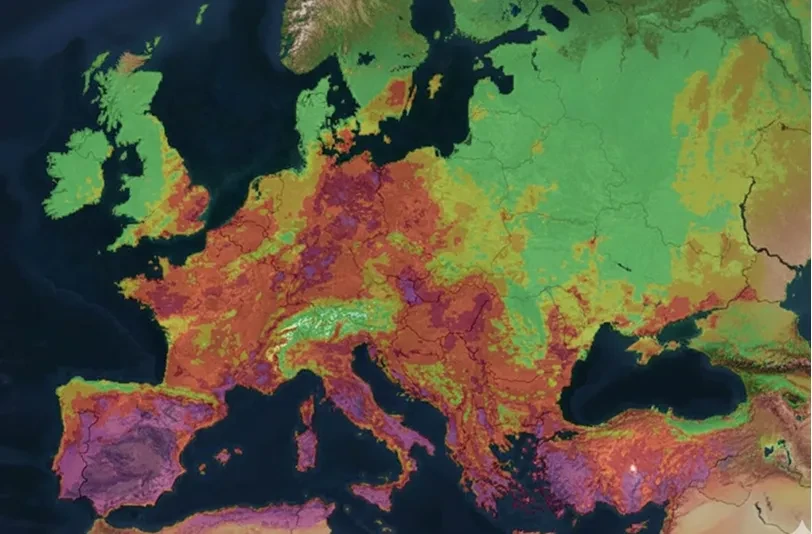
The ECB updated its Climate Change Indicators on 27 November 2025, strengthening the treatment of physical risk. The release gives greater attention to temperature- and precipitation-related hazards and to the way those hazards affect economic exposures.
What changed
The update covers the Standardised Precipitation Index, consecutive dry days and water stress. It also shows marked differences across the euro area, with the largest increases concentrated in southern Europe under higher-emissions scenarios.
The methodological changes include:
- Better geolocation and more precise mapping of hazards and impacts to economic exposures.
- Improved flood and windstorm damage modelling that incorporates inventories alongside tangible fixed assets, addressing an important gap for industrial and manufacturing sectors.
- Revised imputation of missing firm-level inventory data using structured sector and country assumptions.
- A windstorm upgrade based on the Copernicus Enhanced Windstorm Service dataset, with full-year coverage and monthly updates back to 1940.
Why it matters
Physical-risk indicators depend on more than the hazard layer. Geolocation, the assets included in the exposure measure and the treatment of missing data can all change the result. The update makes those modelling choices more consequential for institutions comparing exposures across sectors and regions.
For risk teams, the practical questions are whether their own asset locations are sufficiently precise, whether inventories and other exposed values are captured, and whether changes between reporting periods reflect risk or a revised method.
Alpha-Klima uses these indicators in its assessment pipeline and reviews updates to the underlying datasets and methods before carrying them into portfolio analysis.
Read the ECB climate change indicators release and the accompanying physical-risk indicator documentation for the source methodology.
Keep exploring
Related evidence

Extreme heat as a systemic risk: Europe's 2026 heatwave
An evidence-led analysis of how extreme heat can propagate across assets, infrastructure, communities and economic activity.
Aresbank: Physical climate risk across the banking book
A practical case study of portfolio-level physical climate-risk assessment for an international banking book.